Wildlife Removal · St. Cloud, FL
Wildlife Removal St Cloud FL
St. Cloud wraps around the south shore of East Lake Toho, and the town's east and south edges dissolve straight into pasture, canal, and oak hammock. That means the wildlife line isn't at the county edge — it's at your fence. Raccoons work the lakefront trash cans, armadillos plow the new subdivisions' sod, and squirrels treat the downtown oaks as an attic on-ramp.
Wildlife removal here is humane first and permanent by design. We identify what's actually in your attic or under your shed — from sign, not guesses — get it out with live traps or one-way doors, then seal the entry with metal and hardware cloth so the next animal doesn't inherit the hole. No poison, ever: it kills the animal slowly and the owls and hawks that eat it, too.
St. Cloud · Osceola County
The usual suspects around St. Cloud attics and yards
There's no off-season. Raccoons den in soffits softened by storm rain; gray squirrels chew fascia in daylight; armadillos dig where grubs are thick after wet weeks; opossums move under sheds and lanai skirting. Near the lake and along the canals, everything drinks, feeds, and dens at the water's edge, so lakefront lots get double pressure.
Sign tells us who's home before a trap is ever set. Armadillos fan soil under shed slabs and pit the lawn with cone-shaped digs. Raccoons thump hard after dark and leave latrines in insulation. Squirrels leave two-inch holes with tooth marks and daytime gnawing. Flying squirrels patter softly around 11 p.m. We'll show you the rubs, droppings, and chew marks so you know we're reading sign, not guessing.
Armadillos
The signature St. Cloud digger: cone-shaped holes in turf and mulch kicked across the driveway overnight, hunting grubs after rain. They wedge under shed slabs, decks, and A/C pads. We live-trap the digger, backfill burrows, and bury an L-footer of hardware cloth so it can't push back in.
Opossums
They take the dark gap under sheds and lanai skirting, close to the cat food and the trash. They don't chew much, but they leave greasy rubs, droppings, and that sour garbage smell. We cage-trap gently, release on site per state rules, and screen the skirting behind them.
Raccoons
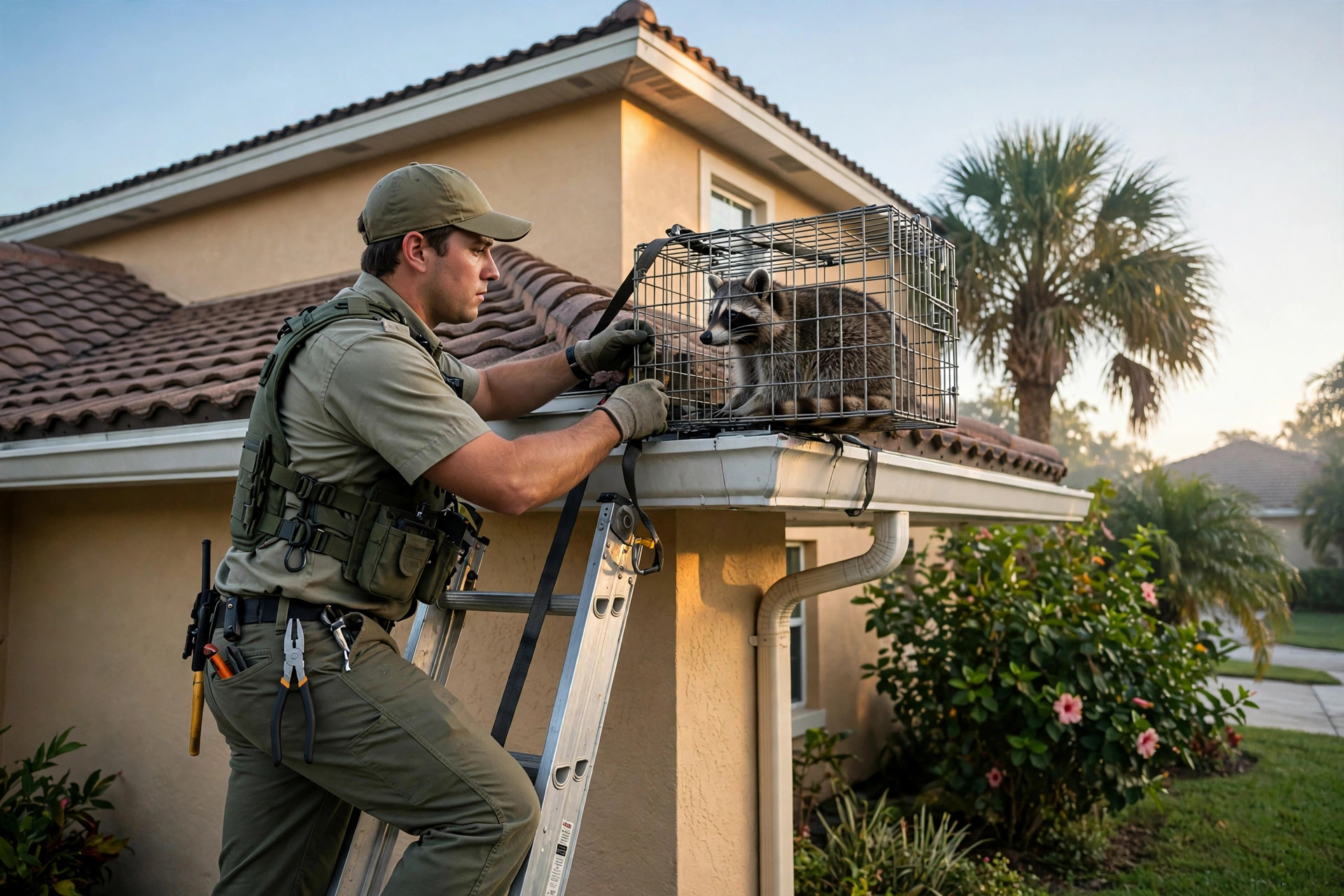
A mother raccoon will peel a loose soffit or lift a storm-softened shingle to den over your bedroom — then it's night thumping, torn trash, missing citrus, and a latrine soaking the insulation. We set shaded live traps, pull the family intact, and close the entry with metal claws can't shred.
Gray Squirrels
Daylight chewers riding the downtown oaks and power lines onto roofs. They shred insulation into nests and leave tooth-marked two-inch holes in fascia and stucco returns. We trap out, patch with metal-backed repairs, and mark the exact limb giving them the bridge.
Flying Squirrels
Tiny, nocturnal, and never alone — a colony sounds like soft pattering and squeaks near 11 p.m., with pellet droppings and a musky smell in the insulation. We don't cage-trap colonies; we fit one-way doors over the seam gaps, let them file out at night, then seal every quarter-inch seam.
Bats
Bats slip a 3/8-inch gap at the gable or ridge and streak stucco with guano. Florida protects them, so there's no trapping — in the allowed season we mount one-way exits, let the colony leave to feed, then seal the roofline and clean the guano we can reach. If timing's wrong, we'll tell you when it opens.
St. Cloud · Wildlife Removal
Lakefront, downtown canopy, and the pasture edge
Along the lakefront, food and shelter sit side by side: fish-cleaning scraps and unsecured trash draw raccoons, dock and shed undersides shelter opossums, and shoreline vegetation hides everything. We set shaded live traps checked daily, handle raccoon families intact — moms and kits together — and close the entry the day the attic goes quiet, because a sealed hole is the whole job.
Downtown, the oak canopy is the access problem. Squirrels and roof rats run limbs to the roofline; raccoons pry at storm-softened soffits. We trap out what's inside, then patch chewed wood with metal-backed repairs and hardware cloth, and tell you the one limb cut that changes the math. Cutting everything is never the answer — cutting the bridge is.
East and south, where subdivisions meet pasture, armadillos do the visible damage: lawns pitted overnight, mulch fanned across the driveway, burrows under slabs and A/C pads. We live-trap the digger, backfill the burrows, and trench a buried L-footer of hardware cloth along the slab so the next one can't bulldoze back in. Florida FWC rules guide what's released on-site and what's handled otherwise — we'll tell you straight which applies to your animal.
What to expect
Our wildlife removal process in St. Cloud
Trapping alone buys you a month in St. Cloud. This is the sequence that makes it stick.
-
Roof-to-yard inspection
We ladder the eaves, pop the attic hatch, and walk the fence line, shed, dock, and lanai base. You get photos of tracks, droppings, rubs, and chew holes, plus a straight call on species — and whether there are young inside, which decides trap versus door. We never seal babies in.
-
Humane get-out plan
Cabled live traps set in shade, or a one-way door bolted right over the hole. Traps are checked daily, animals stay calm and covered, and mothers with kits get the extra care that keeps anyone from being left squealing in a wall. No poisons, ever.
-
Seal and harden the entry
Once it's quiet, we close it for real: galvanized flashing, quarter-inch hardware cloth, vent guards, and polyurethane sealant on stucco gaps — not foam alone. Armadillo runs get a buried footer, and we mark the limbs and trash habits that invited them.
-
Clean up and keep them off
We bag accessible droppings and nest fluff, treat odor with enzyme spray, and vacuum guano dust where reachable. Your short list: lock the cans, pick citrus when it falls, feed pets inside, and keep mulch pulled back off the slab.
Nearby cities
Wildlife Removal in nearby cities
Wildlife Removal in St. Cloud: FAQs
Yes. We use live cage traps and one-way doors, no poisons, and handle animals quietly for on-site release where allowed. Then we seal entries so you don't get repeats.
State rules don't allow moving raccoons off your property, since it spreads disease and they often die or trek back. We'll explain your lawful options and focus on removal plus sealing.
Listen for timing. Gray squirrels move by day, raccoons and flying squirrels thump and patter at night. Chewed soffits, droppings, and musky odor confirm it, but let us inspect the attic safely.
Grading disturbs colonies and new sod, mulch, and irrigation create ideal ant habitat. Fire ants and ghost ants move in fast. Early perimeter and yard treatments plus fixing overwatering usually bring quick control.
Dump and refresh standing water weekly, keep gutters clear, and trim dense shrubs where mosquitoes rest. We supplement that with larval control and targeted adult treatments around patios and lanais. Screens in good repair make a big difference too.
Free inspection · Same-day response
Get a free wildlife removal quote in St. Cloud
Tell us what's bugging you — we'll respond the same business day.
- Free inspection with every quote
- Up-front pricing — no surprises
- The same tech from inspection to re-treat
Prefer to talk? Call (407) 555-0148
Free quote · Same-day service
Wildlife Removal in St. Cloud — done right the first time.
Licensed local technicians, honest inspections, and a satisfaction guarantee on every visit.