Termite Control · St. Cloud, FL
Termite Control St Cloud FL
St. Cloud sits on sand with a high water table, a few feet from East Lake Toho across much of town. Subterranean termites don't commute far in soil like this — they're under the slab, in the mulch line, at the bath trap. The older downtown stock adds a second problem: decades of additions, enclosed porches, and wood-to-soil contact nobody's inspected in years.
Termite work here starts with knowing which house you've got. A 1950s block cottage near 10th Street hides tubes behind enclosed lanais and under additions. A new build off Narcoossee hides them in bath traps and expansion joints before the first year is out. We inspect for both, then match bait or liquid to your soil, grade, and how close the pond sits.
St. Cloud · Osceola County
Termites in St. Cloud soil never clock out
Eastern subterraneans swarm on warm spring days after rain; Formosans fly on humid nights in May and June. In St. Cloud you'll find the wings on lakefront lanai sills and in spider webs by the porch light — and a swarm indoors means a mature colony is already feeding in the walls, not visiting.
Our soil works in their favor. Sand drains too fast for a liquid trench to hold the way it does in clay, and irrigation keeps the soil line against the slab permanently damp — exactly the moisture gradient termites follow. Mulch volcanoes against stucco, grade that slopes toward the house, and A/C condensate lines dripping at the foundation are the three conducive conditions we find on almost every St. Cloud inspection.
Subterranean Termites
The default St. Cloud colony: nests in sandy soil, runs pencil-wide mud tubes up block and stucco to reach framing. We break tubes to check for live workers, tap baseboards through the house, and map the moisture — leaky hose bibs, low grade, wet mulch — that's feeding them.
Formosan Termites
Formosans nest in wall voids and soffits where A/C condensation keeps wood damp, sometimes never touching soil. We moisture-meter rooflines, flat-roof tie-ins, and laundry walls on downtown homes and additions, because a carton nest upstairs laughs at a soil treatment downstairs.
Drywood Termites
Drywoods live in the wood itself — fascia, trim, attic trusses, the old window frames all over the historic avenues. The tell is tiny ridged pellets under kick-out holes. We probe the wood, vacuum frass to confirm it's fresh, and treat the gallery directly.
Dampwood Termites
Dampwoods mean wet wood: rotted eave ends under oak shade, fence boards against stucco, a shower leaking into a wall. Colonies stay small, but they're a symptom. We'll treat what's active and tell you straight which repair actually solves it.
Carpenter Ants (Often Confused With Termites)
Every spring we get 'termite swarmer' calls in St. Cloud that turn out to be Florida carpenter ants — pinched waists, elbowed antennae. They hollow damp window sills and lanai framing and leave sawdust piles. We bait the trail instead of selling you a termite treatment you don't need.
St. Cloud · Termite Control
Old downtown wood, new east-side slabs — two different termite jobs
Downtown and around the avenues, the risk is history. Homes have been added onto for 70 years: a porch enclosed in the '70s, a lanai tied in during the '90s, a carport slab poured against wood siding. Every tie-in is a hidden entry. We probe door casings, tap baseboards, and check where additions meet the original structure, and we're frank about wood-to-soil contact that needs a carpenter before it needs a chemical.
East of town, the risk is speed. New subdivisions off Narcoossee and Canoe Creek went up fast on graded sand, and termites find the bath traps, plumbing penetrations, and foam insulation joints while the landscaping is still new. We check slab edges and expansion joints, look for tubes in the mulch line, and get monitoring in place early — catching a colony in year one is a different job than catching it in year ten.
Buying or selling in St. Cloud? Most resale deals here want a WDO report, and older downtown homes draw the hardest looks from lenders. We inspect the accessible attic, garage, lanai tie-ins, and soil line, photograph what we find — live tubes, old damage, frass, conducive conditions — and write it in plain English buyer, seller, and agent can act on.
What to expect
Our termite control process in St. Cloud
Termite work in St. Cloud is soil, water, and old wood — here's the order we tackle them in.
-
Hands-on inspection
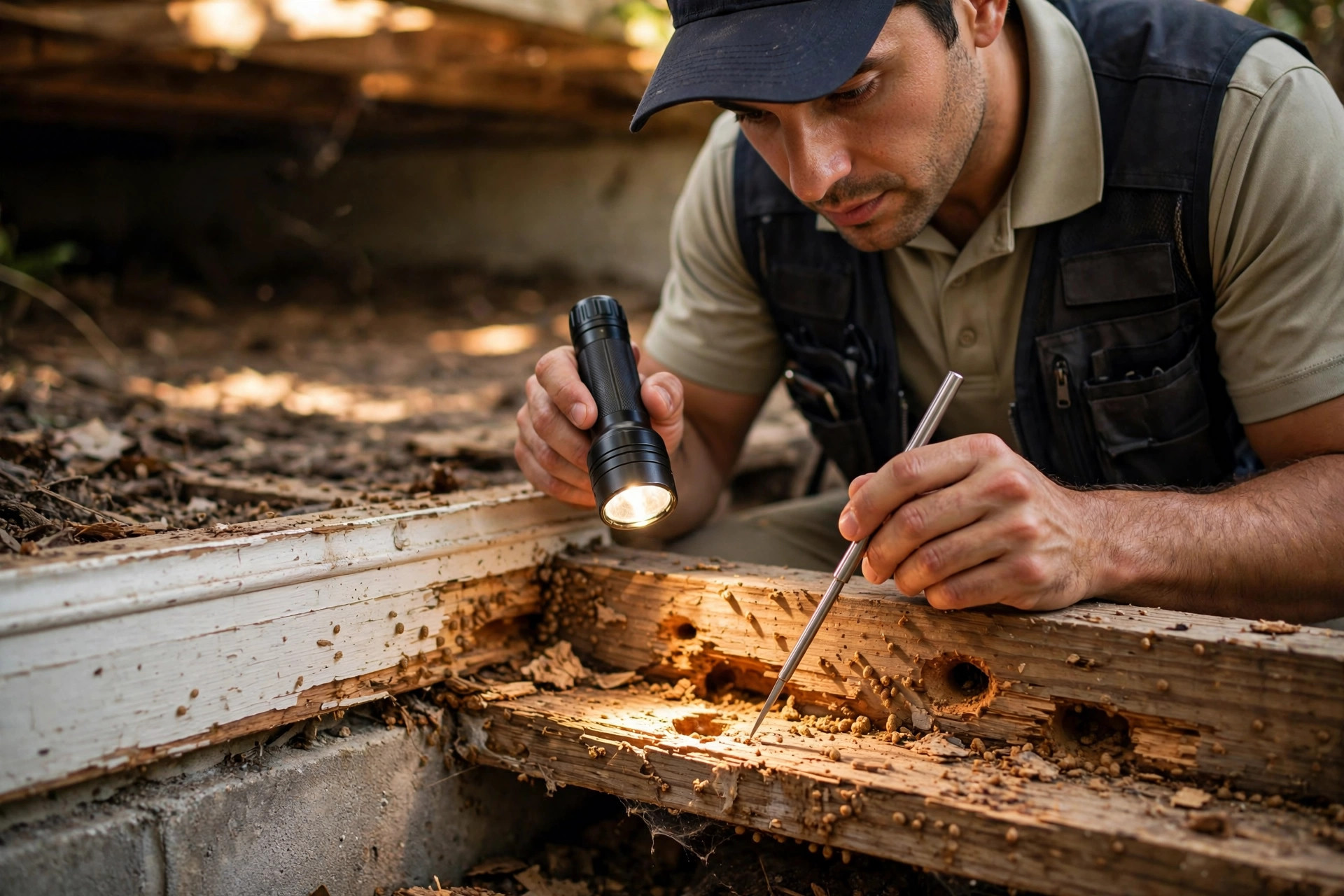
We walk the mulch line, stucco weep, lanai footers, and garage stem walls, then tap baseboards and probe casings and bath traps inside. Moisture readings around A/C lines happen with you standing there, not in a report later.
-
Photos and honest options
You get phone photos of tubes, wings, pellets, or damage — and of the clean areas too. We lay bait against liquid against spot wood treatment for your lot and roof type, with upkeep side by side, and say which one we'd pick on our own street.
-
Install that respects the yard
Stations sit flush so the mower passes over them; trenches hug the footing and lanai drill holes get sealed. We flag irrigation heads and pond setbacks first, rake mulch back, and leave the beds looking like we were never there.
-
Rechecks after swarm season
We return to read stations, re-sight the soil line, and look for fresh wings each spring. Regrade the yard, add a bed, or pour a patio and we adjust the layout on the spot so coverage never silently lapses.
Termite Control in St. Cloud: FAQs
Termites have straight waists, straight antennae, and equal-size wings that fall off in piles. Ants have pinched waists and elbowed antennae. Save a few in a baggie for us to ID under magnification.
They're soil tunnels subterraneans build over block and stucco to reach wood. Break a small piece, active tubes get rebuilt in days. Leave some intact so we can confirm.
Yes, Formosan colonies run bigger and can chew faster, sometimes nesting in roofs without soil contact. Steady bait or a sound liquid zone plus moisture fixes still control them.
Grading disturbs colonies and new sod, mulch, and irrigation create ideal ant habitat. Fire ants and ghost ants move in fast. Early perimeter and yard treatments plus fixing overwatering usually bring quick control.
Dump and refresh standing water weekly, keep gutters clear, and trim dense shrubs where mosquitoes rest. We supplement that with larval control and targeted adult treatments around patios and lanais. Screens in good repair make a big difference too.
Free inspection · Same-day response
Get a free termite control quote in St. Cloud
Tell us what's bugging you — we'll respond the same business day.
- Free inspection with every quote
- Up-front pricing — no surprises
- The same tech from inspection to re-treat
Prefer to talk? Call (407) 555-0148
Free quote · Same-day service
Termite Control in St. Cloud — done right the first time.
Licensed local technicians, honest inspections, and a satisfaction guarantee on every visit.