Mosquito Control · Kissimmee, FL
Mosquito Control Kissimmee FL
Kissimmee is ringed and cut through by water — Lake Tohopekaliga on the east side, East Lake Toho beyond it, Shingle Creek running north through town, and canals and ditches off Neptune Road that hold water weeks after the rain stops. Mosquitoes here are not a visitor problem. They hatch in the retention pond behind the subdivision, in the bromeliads by the pool cage, and in the inch of water standing in a rental home's empty plant saucer, then wait in the shade for the lanai door to open.
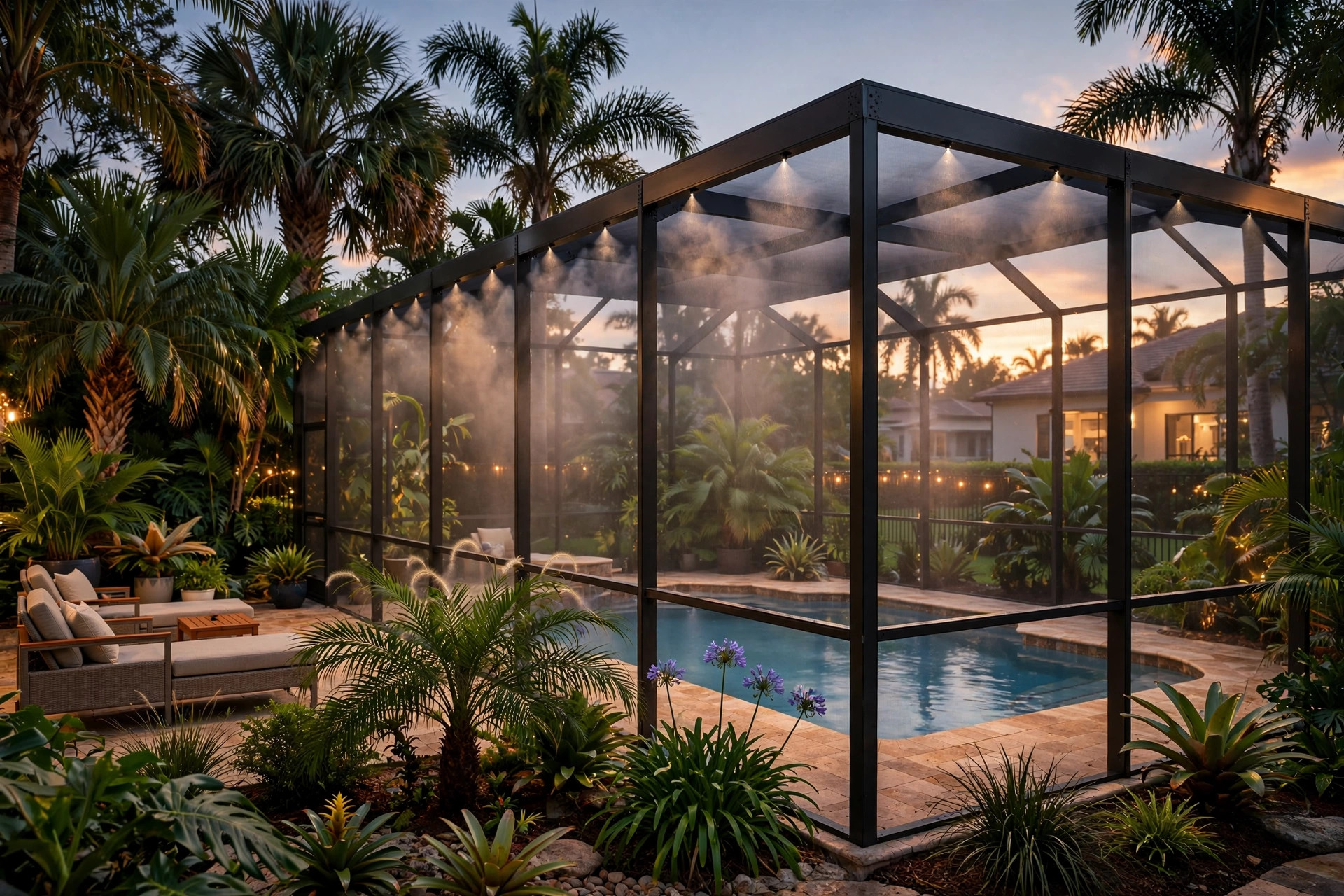
Mosquito control in Kissimmee starts with the water walk, not the sprayer. We tip and drain what can be emptied, larvicide the water that cannot — pond edges on your lot, ornamental features, low swales — and treat the shaded foliage, screen enclosures, and under-deck areas where adult mosquitoes rest through the heat of the day. On US-192 vacation rentals we work around turnover days so the pool deck is usable the evening guests arrive, and we leave the property manager a short list of what to empty between stays.
Kissimmee · Osceola County
Why Kissimmee mosquitoes rebuild within days of every storm
From June through September the afternoon storms off Lake Toho refill every container, gutter, and ditch in town within the hour, and in this heat a new batch of biters is flying in under a week. Asian tiger mosquitoes do most of the daytime damage around Kissimmee patios — they breed in a bottle cap of water and rest under hibiscus, areca, and lanai plantings until someone steps outside. Culex mosquitoes take the evening shift, working the ditches, canals, and pond edges at dusk. Spraying the air alone misses both; the breeding water is the source.
What sets your baseline is how close you sit to water that never dries. Lakefront and canal-side homes get a steady drift of adults off Lake Toho and Shingle Creek no matter what any one lot does. A few streets inland, the subdivisions off Neptune Road and Osceola Parkway back onto retention ponds and swales that breed Culex along their grassy edges all season. And in the older downtown streets, deep oak shade keeps yards damp and dark — perfect daytime resting cover. We read the lot — its water, its shade, and how the yard is actually used — before we talk about a schedule.
Asian Tiger Mosquitoes
The daytime biters on Kissimmee patios. Aedes albopictus breeds in plant saucers, bromeliad cups, clogged gutters, and toys holding a bottle cap of water, then rests under hibiscus and areca leaves until you step out. We coat the leaf undersides where they sit and empty or treat the water they came from, lot by lot.
Culex Mosquitoes
The dusk shift. Culex quinquefasciatus breeds in the ditches off Neptune Road, canal edges, and the still margins of retention ponds in Storey Lake and Bellalago, and bites from sundown on. We larvicide the water on your lot that cannot be drained and put barrier coverage on the pond-facing foliage between the water and your lanai.
Floodwater Mosquitoes
After a big storm off Lake Toho, floodwater species hatch in waves from eggs laid in low ground, swales, and ditch banks that were dry the week before. One downpour can restart a whole street. We time the follow-up visit to the post-storm hatch instead of the calendar, and walk the low spots that fill first.
Biting Midges and No-See-Ums
Around the Lake Toho shoreline and Shingle Creek, midges breed in wet muck and slip straight through standard pool screen on still evenings, and the ankle welts dwarf the bug. We treat the damp, shaded line where they hold, and tell you honestly when finer lanai screen or a fan beats another treatment.
Stable Flies Around Larger Lots
Out toward Buenaventura Lakes and the bigger lots on the town's edges — dogs, a coop, a horse or two — stable flies chew ankles around kennels and compost and breed in wet grass clippings and soaked bedding. We treat fence shade and kennel edges and flag the cleanup that stops the next hatch.
Kissimmee · Mosquito Control
Lake Toho shoreline, US-192 pool decks, and pond-back subdivisions
Along Lake Tohopekaliga and the canals feeding it, the honest picture is drift plus drainage. Shoreline grass, dock edges, and the low ground behind lakefront homes hold moisture all season, and adults move in off the water on still evenings no matter how clean one yard is. We concentrate barrier coverage on the water-facing side of the lot and the shaded plantings mosquitoes rest in, larvicide the standing water on your side of the fence line, and say plainly that a lanai fan will out-perform any treatment on the worst nights — then make sure the nights around it are the ones you get back.
On the US-192 corridor the breeding sites are man-made and they reset with every guest. Pool decks, hot tubs, and lanais at vacation rentals collect water in saucers, cover folds, toy bins, and clogged deck drains, and a house that sits empty for four days between stays hatches a fresh batch for the next arrival. We schedule around check-ins, walk the deck and plantings with the cleaner's checklist in mind, treat the screen enclosure seams and shaded foliage guests sit beside at dusk, and flag the standing-water spots the turnover crew can empty in two minutes.
In Storey Lake, Bellalago, Kindred, and the other newer subdivisions, every neighborhood is built around its retention ponds, and Culex breed along the pond banks while Aedes work the patios a few feet away. Fresh landscaping means bromeliads, saucers, and irrigation that runs daily. We treat the foundation plantings and shaded foliage between your patio and the pond, larvicide the drainage low spots and water features on your lot, hunt the storm-filled toys and tarps after each round of rain, and time repeat visits to the hatch cycle — three to four weeks in rainy season — because that is how fast the cycle turns here.
What to expect
Our mosquito control process in Kissimmee
Mosquito work in Kissimmee is a water hunt first and a treatment second — this is the route we walk.
-
Walk the water and the shade
Gate to lanai: saucers, bromeliads, gutters, deck drains, toys, tarps, then the pond edge, swale, and the shaded shrubs where adults rest all day. You hear exactly where we think your pressure hatches from — and what drifts in off Lake Toho or Shingle Creek that no single lot controls.
-
Tip, drain, and larvicide what stays
We dump what can be emptied, brush saucers, clear tarp pockets and deck drains, and larvicide the water that cannot go anywhere — pond margins on your lot, ornamental features, low swales. On rental properties this becomes a two-minute checklist the turnover crew can repeat between guests.
-
Barrier where they rest
We treat leaf undersides, ground cover, fence lines, screen-enclosure seams, and patio perimeters — the shade mosquitoes sit in all day. Blooms, vegetable beds, and pool coping get eased off, pets and guests stay in until it is dry, and gates are closed behind us.
-
Reset on the hatch cycle
Rainy season refills everything, so we return on a three-to-four-week rhythm, refresh the barrier, and hunt new water. After a major storm we expect the floodwater hatch and say so. Between visits, dump what fills after rain and tell us when bites spike — we will say honestly if you need us sooner.
Nearby cities
Mosquito Control in nearby cities
Mosquito Control in Kissimmee: FAQs
No. Ponds, ditches, and neighbor yards around Osceola and Orange keep sending them in. We cut biting pressure way down so patios stay usable, but a few drifters after rain are normal.
Usually a few weeks. Afternoon storms, irrigation, and fast growth wear it down. We time summer returns every three to four weeks and recheck water each stop.
We keep spray off blooms, veggies, and open water and stick to resting leaves and shade. Show us ponds, butterfly plants, and bowls on the walk and we'll work around them.
Heavy rain floods sewers, mulch beds, and tree holes where American cockroaches shelter. They move to higher, drier ground, which often means garages, porches, and doorways. Sealing gaps and treating the perimeter greatly reduces these push-ins.
Yes, lake edges, canals, and nearby retention areas hold water and shade that mosquitoes love. Even if your yard is dry, adults can drift in from nearby breeding spots. Source reduction plus targeted treatments of resting areas gives the best relief.
Free inspection · Same-day response
Get a free mosquito control quote in Kissimmee
Tell us what's bugging you — we'll respond the same business day.
- Free inspection with every quote
- Up-front pricing — no surprises
- The same tech from inspection to re-treat
Prefer to talk? Call (407) 555-0148
Free quote · Same-day service
Mosquito Control in Kissimmee — done right the first time.
Licensed local technicians, honest inspections, and a satisfaction guarantee on every visit.